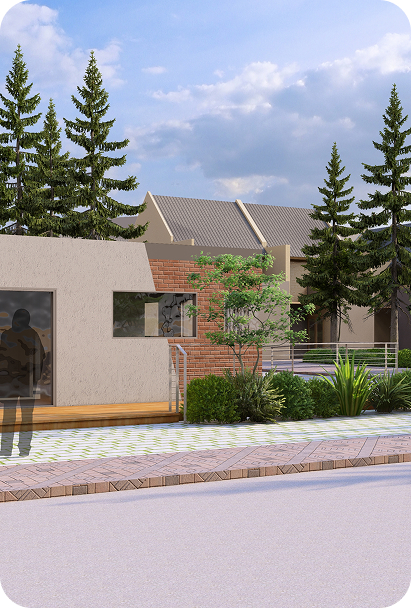
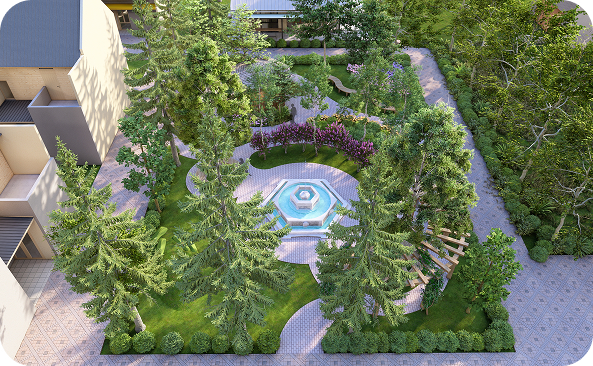
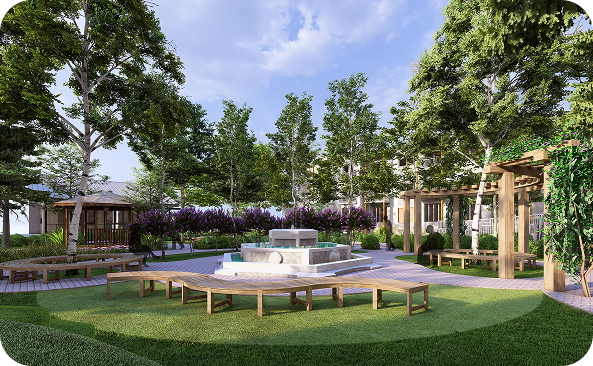
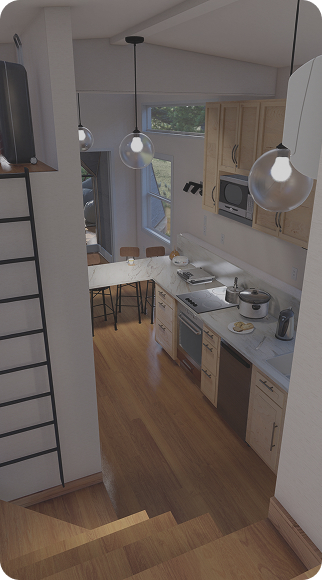
The system is structured to support four priorities in aging and dementia-oriented development: cost control, scalability, adaptability, and the ability to relocate or reconfigure assets over time. Modules are pre-manufactured to standard, built for compliance, and planned in alignment with zoning and site constraints.
Formats
Deployment Structures
All formats are supported by site studies, code-compliant design documents, and installation planning that accounts for access, topography, and servicing.
Permanent
Full developments on secure land with long-term utility and infrastructure
Phased
Incremental additions on the same site to align with operational or capital growth
Satellite
Independent clusters that operate adjacent to other care or housing systems
See how our systems are structured to support four priorities in aging and dementia-oriented development
Cost-effectiveness
Modular Care Facilities:
Build Faster, Spend Smarter
Off-site manufacturing reduces construction time and minimizes labor demands, lowering overall expense. Standardized production ensures pricing stability across different sites. Modules are pre-reviewed for compliance, reducing permitting delays and allowing sitework and fabrication to proceed in parallel.
Scalability
Scalable to match growth and available capital
Modular houses can be deployed in a few stages according to demographic needs, service planning, and available funds. Communities can be expanded without significant redesign, re-permitting, or infrastructure changes. Phased builds are particularly applicable in regions with staggered capital availability or populations expected to increase incrementally.